

What Measure 26-267 Does
Eight paragraphs that create one permanent obligation. But nothing about the proposed participatory budgeting process is actually defined.
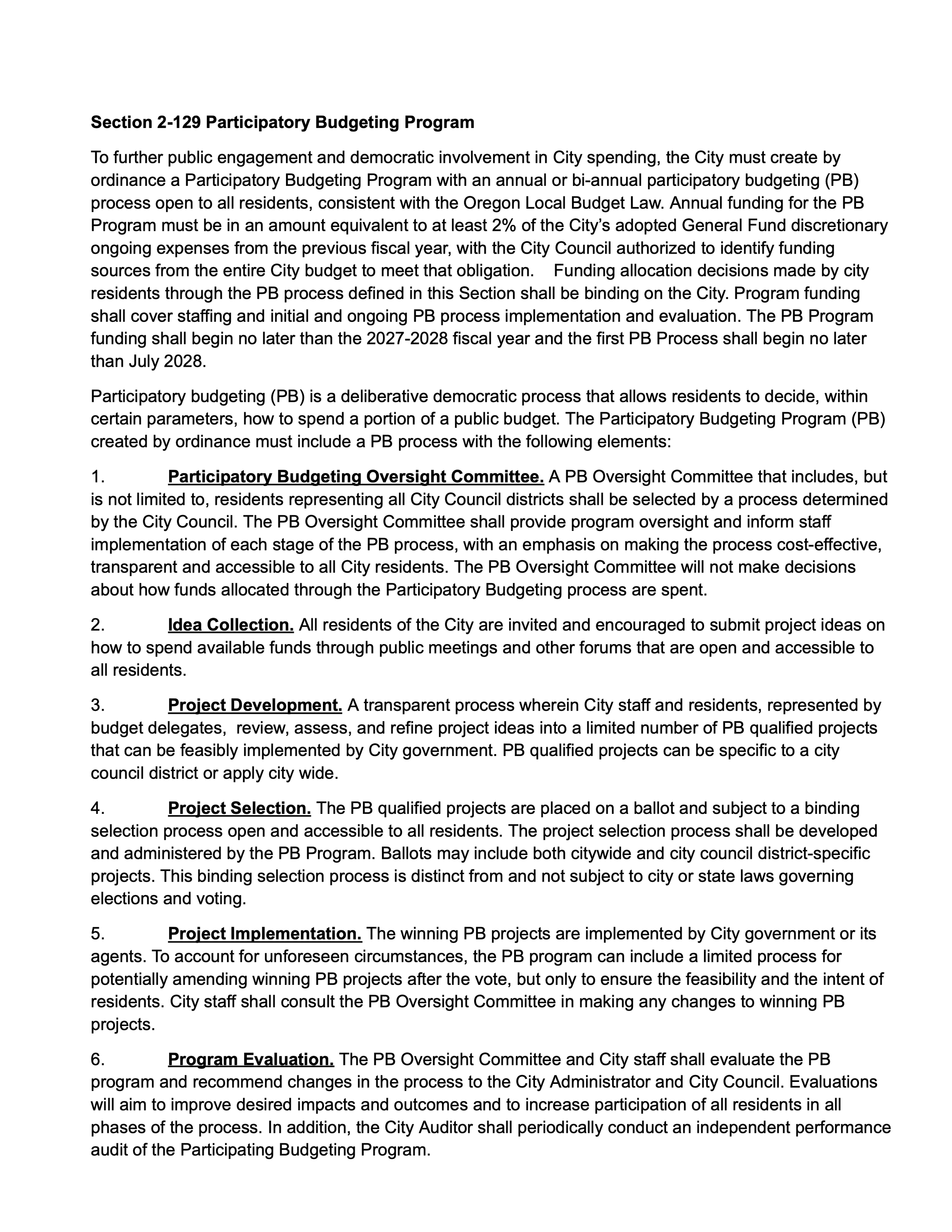
Measure 26-267 would add Section 2-129 to the Portland City Charter.
Here’s what it does and doesn't do:
What goes in the charter — permanently
The city must fund a participatory budgeting program at "at least 2%" of the prior year's General Fund discretionary ongoing expenses — roughly $16 million and growing, by the campaign's own figures and the certified ballot title.
Resident funding decisions "shall be binding on the City."
Council may pull the money "from the entire City budget" to meet the obligation.
Funding begins by fiscal year 2027–28. The first process doesn't have to begin until July 2028 — meaning millions can be obligated before a single resident votes on a single project.
What the charter amendment leaves out
The measure does not say:
What the money can be spent on. The “at least 2%” figure would go in the charter, but the specifics about how that could be spent aren’t anywhere. There is no one-time-projects clause, no duration cap, no restriction of any kind. The proponents promise that it "does not fund ongoing City programs" appears in their FAQ, but not in the measure.
Who gets the tax dollars. Projects are implemented by "City government or its agents" — a term the amendment doesn’t define. The amendment doesn’t set minimum qualification standards for who is eligible to receive these tax dollars.
Who can vote, and how the vote works. The amendment requires City Council to create a Participatory Budgeting Program by ordinance. The “project selection process” would be developed and administered by the Participatory Budgeting Program, with projects “placed on a ballot and and subject to a binding selection process open and accessible to all residents.” That’s all we know; there’s nothing spelled out about how residency is verified, or whether there’s a minimum age to vote. There’s no election audit requirement, recount procedure, or process to resolve a contested result. In the amendment’s own words: “This binding selection process is distinct from and not subject to city or state laws governing elections and voting."
Only the amount of funds is locked into the charter. Everything about the program’s safeguards is left for later — to a future ordinance, written by a future Council, guided by a committee that doesn't exist yet.
Sources: certified full text (1PDX2025); certified ballot title.